Homeowner's Guide to Types of Driveways | The Family Handyman
We all utilize driveways, but how often do you end to consider what y'all're parking on? Here are the pros and cons of seven driveway materials.
From dirt-rut wagon tracks to the elegant brick pavers of Thomas Jefferson'due south Monticello, Americans have been balancing cost and advent when choosing driveway materials for centuries. Today, new materials let for a staggering variety of choices to accommodate near every possible budget and driveway design preference.
Here are pros and cons of seven of the most popular driveway options, with a special focus on price, longevity, maintenance, climate ceremoniousness and sustainability.
Asphalt Driveway (AKA Blacktop)
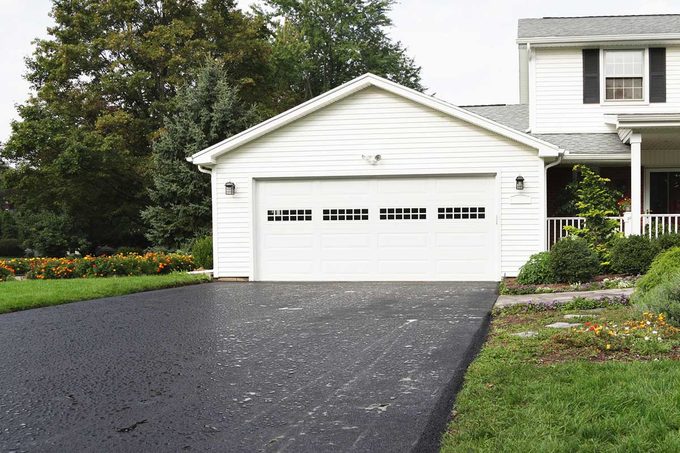
Asphalt pavement is one of the most common materials used for driveways in the U.S. A favorite of homeowners and schoolhouse builders everywhere, cobblestone is affordable and quick to install. It'south a great choice for large areas and creates a smoothen, compatible appearance.
Pros
- Cost: Asphalt driveways are relatively affordable, ranging from $5 to $12 per foursquare pes installed.
- Maintenance: Like shooting fish in a barrel to patch and repair modest damage in a fashion that isn't readily visible.
Cons
- Lifespan: Asphalt driveways have a life of 20 to 25 years, shorter than almost other materials on this list.
- Climate: Blacktop absorbs rut, making it hot to the touch (peculiarly on blank feet). Very high temperatures can cause it to soften, sticking to shoes and allowing cars to go out tire tracks.
- Sustainability: Asphalt is a petroleum product. Although there accept been advances in asphalt recycling, it is 1 of the least environmentally friendly driveway options.
Concrete Driveway
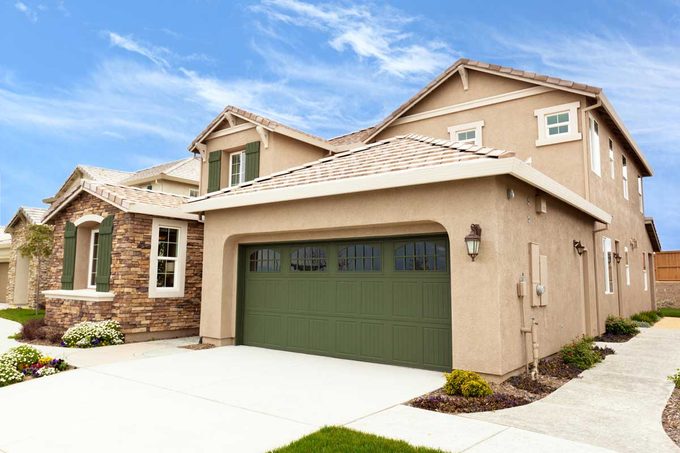
The other near pop selection for driveway material is physical. A robust fabric that tin can take a beating from the weather, concrete is a keen choice for any climate.
Pros
- Cost: Ordinarily between $5 and $8 per square foot installed.
- Longevity: Lifespan upward to xl years.
- Maintenance: Relatively little regular maintenance.
- Climate: Suitable for hot or cold environments. (In snowy conditions, have care when applying ice melt.)
Cons
- Cracks: All concrete will cleft eventually.
- Maintenance: When something does go wrong, a repair can be difficult to patch in or hide.
- Sustainability: Concrete isn't a petroleum product, but it also carries an environmental cost.
Brick or Paver Driveway
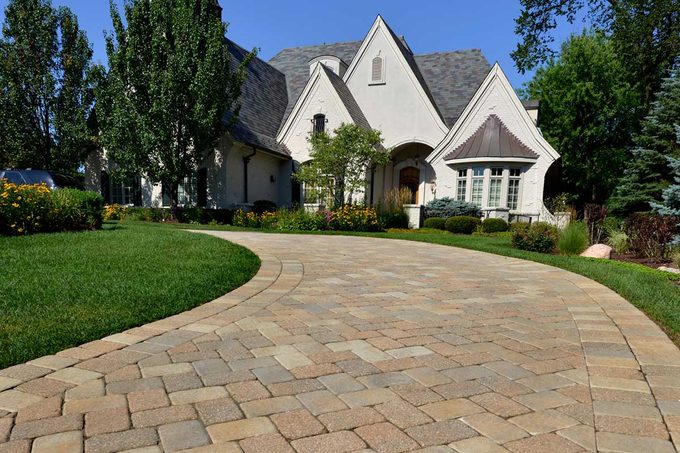
Individual bricks or pavers provide a height-end driveway textile, combining high durability with artful entreatment and easy customization. Dirt bricks have a shorter lifespan than concrete or stone pavers. All iii types tin be easily removed and replaced if damaged.
Pros
- DIY friendly: Of all the options, the paver driveway is the about DIY friendly. It's however a fair amount of work, only it doesn't require heavy equipment.
- Flexibility: Even meliorate able to withstand globe movement than concrete.
- Longevity: Look a lifespan of upwardly to 50 years for brick, and upwards to 75 years for concrete or stone.
- Pattern diverseness: Bricks and pavers, in a multitude of colors and shapes, can be laid in endless patterns.
- Sustainability: Clay bricks and stone pavers have a reduced environmental bear on if locally sourced.
Cons
- Flexibility: The same properties that let it to withstand the ground heaving and settling ways that individual pavers may sink or stand proud and need to be adapted. (The amend the original install, the less of a problem this will exist.)
- Cost: There'southward a huge range of prices for paver driveways. Individual pavers can cost anywhere from $ii to $15 each; add together in the substrate and labor and the final price will end upwards between $8 and $30 per square foot installed. The final cost depends on the look, style and pattern you choose.
Stamped Concrete Driveway
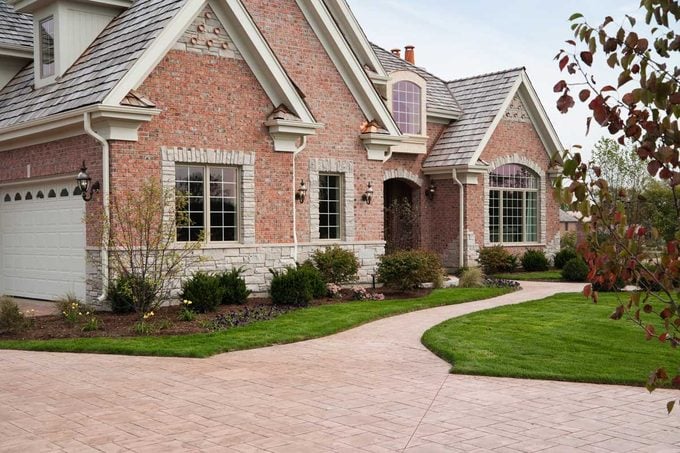
Stamped concrete driveways mimic the expect of pavers through the use of imprinted patterns and stains. Providing high durability, they price somewhere between standard concrete and a total paver driveway.
Pros
- Cost: At $10 to $12 per square human foot installed, stamped concrete is more affordable than natural stone, brick or concrete pavers
- Advent: Stamped concrete has an nigh unlimited range of styles and appearances.
- Durability: Should final approximately equally long as a regular concrete driveway, but it's possible for the decorative stamping and staining to fade earlier that.
- Climate: Stamped concrete is a versatile textile, well-suited for whatsoever climate.
Cons
- Cracks: All physical will crack eventually.
- Maintenance: Repairs tin can be difficult to blend in.
- Not DIY friendly: Installation requires skill with concrete as well as stamping and staining. Because the driveway is usually poured all at once, even small mistakes tin can exist noticeable.
- Sustainability: Stamped physical has the same ecology issues as traditional concrete.
Gravel Driveway
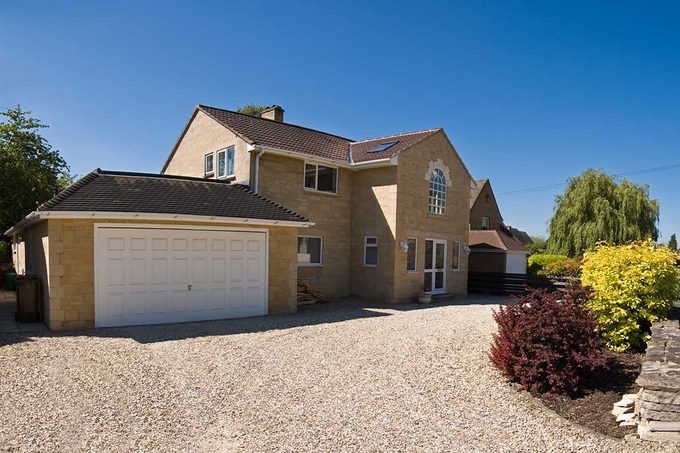
Gravel driveways can look elementary, or they can be role of a complex and meticulously designed entryway. A skilful choice for warmer climates, the gravel stones are probable to outlive your dwelling house. But over fourth dimension the gravel will be spread across the backyard and street, requiring the occasional height-off and leveling.
Pros
- Toll: At $1 to $3 per square pes installed, gravel is the well-nigh affordable choice on this list.
- Options: There are lots of gravels, with different colors and sizes.
- Sustainability: Gravel is a naturally occurring textile. It has the same h2o permeability every bit far more expensive paver options at a fraction of the price.
- DIY Friendly: As long as you lot can go the base material and top-stone delivered, spreading it is relatively simple for small-scale driveways. (The savings might be less than you remember, since pros employ heavy equipment to make short piece of work of things.)
Cons
- Maintenance: Ruts and depressions volition eventually form. If your driveway is sloped, the loose gravel will inevitably make it out to the street.
- Climate: Very difficult to proceed clear of snowfall. All-time for regions with lilliputian or no snowfall.
- Dirt: Gravel generates grit and droppings, similar to driving on a dirt road. That grit has to settle somewhere, most likely on your car and the side of your home.
Permeable Paver Driveway
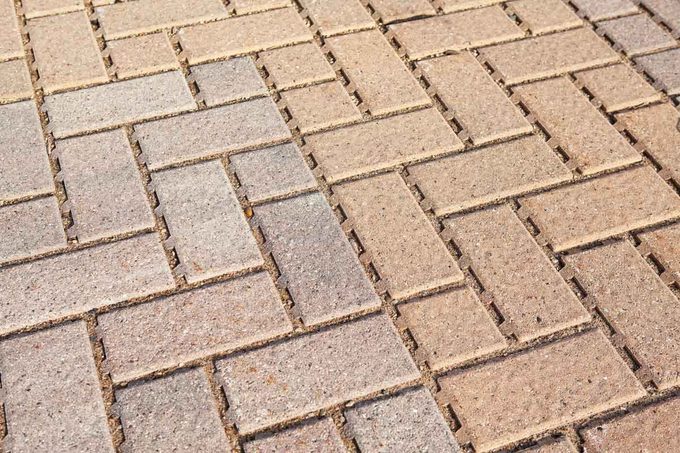
Permeable pavers are a newer technology that is get-go to grab on with a wider audience. Designed with engineered holes, the pavers let rainwater and snowfall melt to flow through to the footing beneath. This has multiple environmentally benign side effects, every bit well every bit applied advantages. (At that place is too permeable physical and cobblestone with tiny pores to permit water penetration, merely hither we'll focus on pavers.)
Pros
- H2o permeable: This means less neat, spalling and puddling. It also means less ice.
- Sustainability I: Permeable surfaces agree less oestrus, which ways they don't create a hot bubble of air directly in front end of your abode. It's better for the environment and may lower your cooling neb.
- Sustainability II: Less storm bleed runoff and less demand to water the lawn, benefitting the surroundings and you lot.
Cons
- Soil dependent: If you have dumbo clay soil, that driveway h2o will penetrate the pavers only to pool on top of the soil. Boosted piece of work will be needed to go information technology where you want it to become.
- Toll: Permeable paver driveways run anywhere from $twenty to $xl per square foot installed. Merely like traditional pavers, it'south dependent on cloth and design pick.
- Maintenance: The porous surface can become clogged. Programme on almanac pressure washing or vacuuming to articulate out the piffling holes.
- Snow: The same reason permeable surfaces don't hold heat means that it is more likely to accumulate snow. Of course, once the snow melts, that water will bleed away before icing over.
Turf Driveway
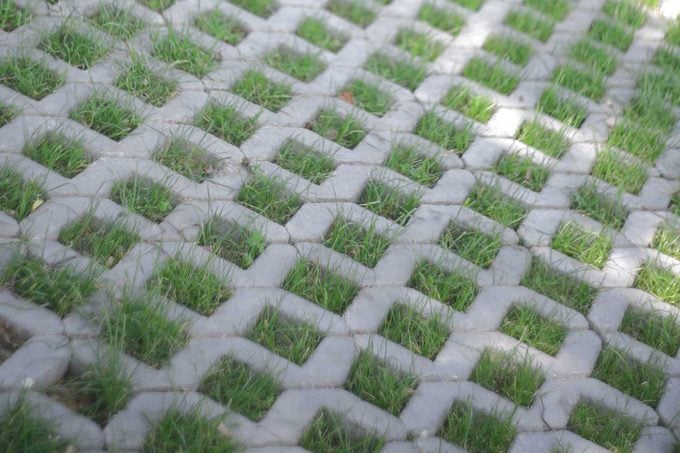
Another recent innovation, turf driveways use permeable pavers with holes broad enough to allow grass or footing comprehend plants to grow and flourish. It can have the await of a alloy of pavers and turf, or appear to exist a normal lawn but with reinforcement to avoid ruts and divots caused when parking on grass.
Best suited to a warm climate where the green grass volition last and snow isn't a problem, a turf driveway is an middle-catching and innovative driveway technology.
Pros
- Beauty: The attractive, streamlined, natural expect of turf driveways is their major selling point.
- Sustainability: Turf drives are even cooler than other permeable surfaces.
Cons
- Cost: $10 to $30 per square foot installed, mostly determined by the blazon of paver you select.
- Maintenance: They're an extension of your backyard, so watering and weeding are required.
- Lifespan: The broader openings crusade the pavers to wear down faster. Longevity depends on the pavers selected, but 10 to 15 years for nearly residential driveways is a proficient estimate.
- Uneven footing: The grass/block surface isn't friendly to wheelchairs or high heels.
- Climate: If you lot take to shovel snowfall, it volition feel similar you're shoveling a lawn.
Source: https://www.familyhandyman.com/article/driveway-types/
0 Response to "Homeowner's Guide to Types of Driveways | The Family Handyman"
Post a Comment